The AIDS Encyclopedia · Health & Medicine
HIV / AIDS
Acquired immunodeficiency syndrome — a chronic, potentially life-threatening condition caused by the human immunodeficiency virus.
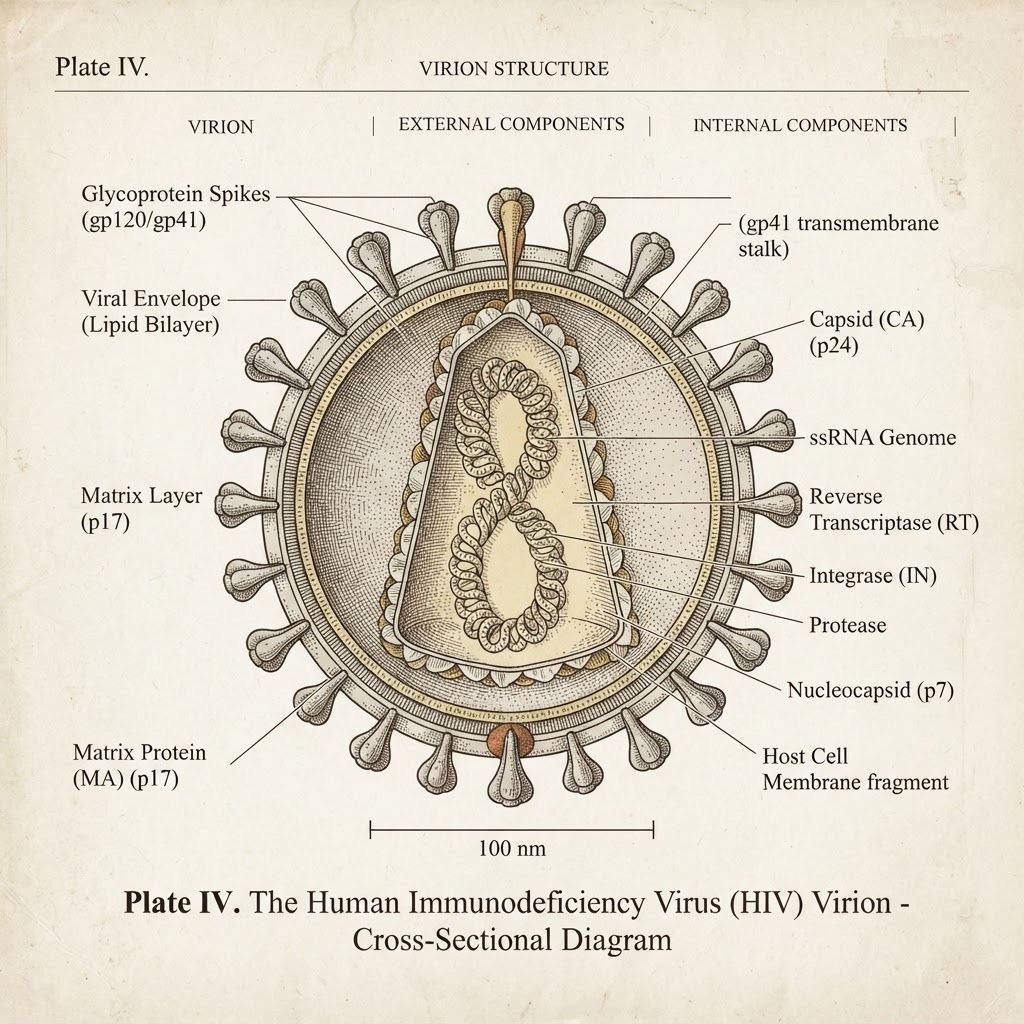
HIV (human immunodeficiency virus) is a retrovirus that attacks the body's immune system, targeting the CD4 lymphocytes that coordinate the response to infection. Left untreated, HIV gradually weakens the immune system until it can no longer defend against everyday pathogens. The most advanced stage of this process is known as AIDS (acquired immunodeficiency syndrome). Crucially, HIV and AIDS are not synonymous: with modern treatment, a person may live for decades with HIV and never progress to AIDS.
History
The syndrome was first clinically recognised in 1981, when clusters of otherwise rare illnesses appeared among previously healthy people. Within two years the underlying virus had been identified. What began as a poorly understood epidemic has, through decades of scientific and public-health effort, become a manageable chronic condition for those with access to care — though it remains one of the defining global health challenges of the modern era.
Transmission
HIV is transmitted through specific body fluids — blood, semen, vaginal and rectal fluids, and breast milk. It is not spread through casual contact: hugging, shaking hands, sharing food or utensils, toilet seats, or insect bites carry no risk. Correcting these misconceptions is one of the most effective ways to dismantle the stigma that has long surrounded the disease.
Prevention
HIV is preventable. Condoms, pre-exposure prophylaxis (PrEP), post-exposure prophylaxis (PEP), routine testing, and never sharing needles all dramatically reduce risk. A landmark finding underpins modern prevention: people on effective treatment who maintain an undetectable viral load cannot transmit the virus sexually — the principle known as Undetectable = Untransmittable (U=U).
Treatment
Antiretroviral therapy (ART) is not a cure, but it is transformative. Consistent treatment suppresses the virus to undetectable levels, preserves the immune system, and prevents onward transmission, allowing people living with HIV to lead long and healthy lives. Early testing and sustained access to care make the decisive difference.
References & further reading
- UNAIDS — Joint United Nations Programme on HIV/AIDS
- “HIV/AIDS.” Wikipedia, The Free Encyclopedia
- “AIDS.” Encyclopædia Britannica
Global figures are approximate estimates reported by UNAIDS for 2023. This article is provided for awareness and education only and does not constitute medical advice.